This article was automatically translated from HIBAPRESS, the Arabic version:
Hibapress-Rabet-BM
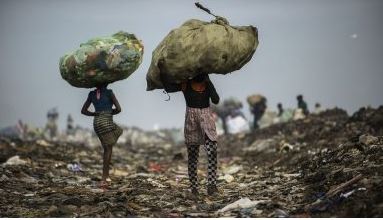
Sociologists and economists specializing in inequality and social ruptures confirm that poverty is divided into several categories with integrated poverty, marginal poverty, and disqualification poverty or rather downgrading.
-The integrated poverty corresponds to a situation where those called “poor” are numerous in the same territory. They are little distinguished from other strata of the population. Their situation is common and refers to the more general problem of a given region or locality which has always been poor. “Poor” people form an extended social group, they are not strongly stigmatized. They are accepted in their environment and local authorities must bring them specific support and aid.
-The poverty of marginality refers to another social representation: these “poor” are often deemed unsuitable for the current world and it is common that they are designated by the general public as “social cases”, which inevitably maintains their stigma. This social group is relatively few, but remains very visible. However, it is still the subject of strong attention on the part of social action institutions. But despite the means deployed, the process of insertion and success remains very uncertain. Indeed these people are often considered as marked by a form of fatality which can go up to several generations. These people often do not do what is expected of them. These are the “bad poor”, those who do not respect the rules enacted for them.
-The poverty from a disqualification process is another elementary form of poverty. It is part of a process that affects the fringes of the population which were previously perfectly integrated into the job market. This process concerns people faced with increasingly heavy precarious situations both in the area of income, housing and health conditions, as in participation in social life. People who live these downgrading processes suffer enormously because they often have an acute awareness of their situation. They have lived in the past in relative comfort when they must deprive themselves in an important and drastic way if they want to avoid the great exclusion.
Today, the dominant image of the poor is that of the victim of a form of social disqualification following one or more severe ruptures. Single women with children are increasingly affected. (Men alone unemployed also). The feeling of social insecurity has been solidly anchored in collective conscience to the point that several “victims” are now afraid of being affected by poverty and living exclusion