HIBAPRESS – Muhammad Dahir
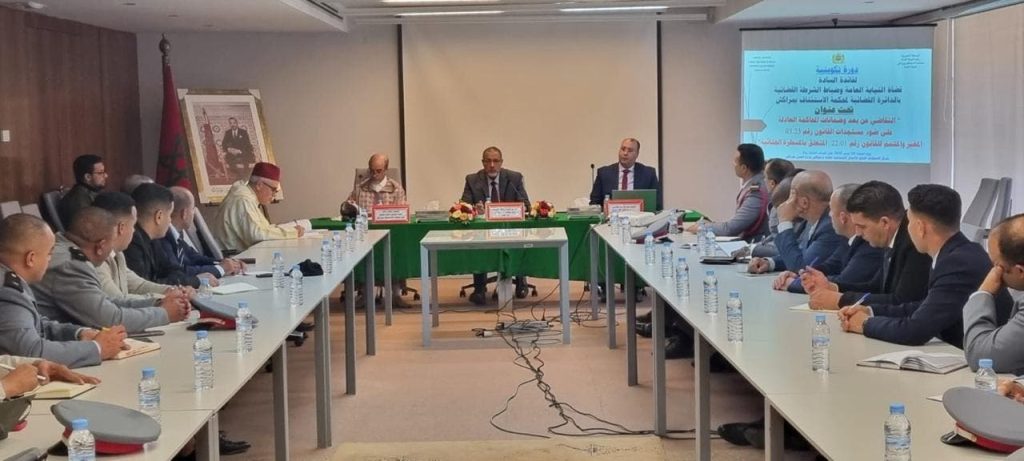
Within the framework of continuing efforts to enhance the professional capacities of actors in the justice system, and to implement the developments in criminal legislation, a training session was organized on December 28, 2025, for the benefit of public prosecution judges and judicial police officers in the judicial district of the Court of Appeal in Marrakech.
This meeting comes in implementation of the circular of the President of the Public Prosecution Office No. 25 dated November 10, 2025, concerning the developments in the work of the Public Prosecution Office under Law No. 03.23 amending and supplementing the Criminal Procedure Law, which calls for strengthening continuous training and enabling judges and judicial police officers to have a precise understanding of the new provisions to ensure their proper application. The Attorney General at the Court of Appeal in Marrakech, Professor Khalid Kardoudi, chaired this training session, who emphasized in his opening speech the great importance of establishing an effective digital justice system that meets the requirements of digital transformation, without prejudice to the guarantees of a fair trial as guaranteed by the constitution and international conventions. The meeting focused on: "Remote litigation and guarantees of a fair trial in light of the developments in the Criminal Procedure Law No. 03.23 amending and supplementing Law No. 22.01". The program included a detailed presentation of the legal and organizational framework for remote litigation, highlighting the most important controls and guarantees to be observed, including the presence of the accused, empowering the defense, respecting publicity, ensuring the safety of procedures and the confidentiality of data, in addition to reviewing the practical constraints and possible solutions to improve this reform workshop. The session was also an opportunity to deepen the discussion on the practical aspects of these developments, and the role of the Public Prosecution and the Judicial Police in the proper implementation of the provisions of the law, especially regarding the documentation of sessions, the adoption of modern technical means, and strengthening coordination between the various actors in the litigation process. The work of this session concluded with a set of recommendations aimed at enhancing the efficiency of actors in the field of criminal justice, supporting digital transformation in courts, and continuing to develop judicial practices to ensure efficiency, transparency, and the protection of rights and freedoms.