HIBAPRESS
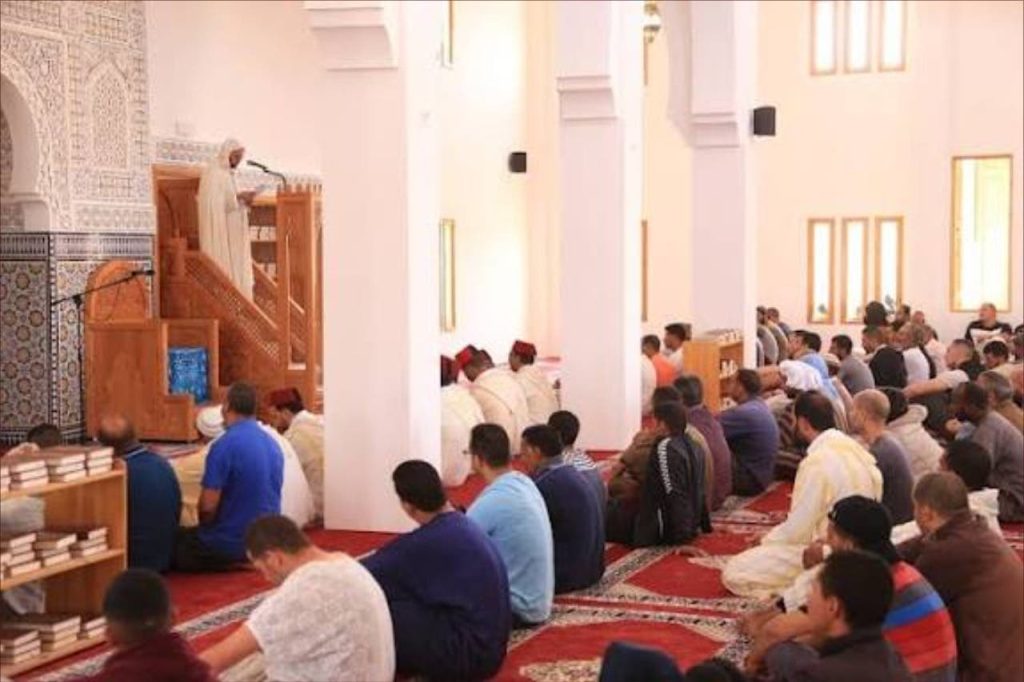
The Ministry of Endowments and Islamic Affairs published the unified Friday sermon for today, January 23, 2026.
First Sermon:
Praise be to Allah, who indicates Himself through His great signs in the cosmos, calling to His oneness and worship through what He revealed of the message and explanation, the Almighty, who said in summarizing the purpose of the Book:
﴿This is a message for mankind, that they may be warned thereby, and that they may know that He is the only God, and that those with understanding may take heed.﴾.[1]
We praise and thank Him, seek His help and forgiveness, and bear witness that there is no god but Allah, and that Muhammad is His servant and messenger, a testimony from one who said: "My Lord is Allah, then he stood firm." May Allah bless and grant peace to the one sent as a mercy to the worlds, our master Muhammad, his good family, his righteous companions, and those who follow them in word and deed until the Day of Judgment.
As for what follows: O believers, the purpose of the "Plan for Rectifying the Message" undertaken by scholars, stemming from their duty entrusted to them, is to correct the understanding of religion and religiosity, as it came in the Holy Quran and the Prophetic Sunnah, encompassing the lives of people in their relationships with Allah Almighty, and in their relationships with all creatures. Therefore, the sermons came for a period of more than a year on the major axes of human life, in order to connect the Muslim with action, and to monitor the effects of the message in the behavior and daily practices of people, as the intended purpose is not knowledge of religion in itself nor explanation, but rather the intended purpose is acting upon what has been conveyed and explained.
Therefore, the scholars followed the methodology of the Quran and the Sunnah in highlighting the meaning of religiosity in people's lives, and in taking them gradually until they act upon what they have learned; because the affliction of religion is that it has no effect in the lives of the religious. Especially when they imagine that religion is a private matter between the servant and his Lord, and this contradicts the correct understanding of the religion of Islam, which is the religion of life, the fulfiller of the purposes of Sharia, and the purposes of the servants, according to the will of Allah Almighty in them.
Therefore, the past sermons came in the five axes that we have listened to during approximately a year and a half, and will return to further explanation of them, in confirmation of the saying of Allah:
﴿And remind, for the reminder benefits the believers.﴾.[2]
First: The axis of Tawhid (Oneness of God); and its effect in instilling faith in hearts, freeing souls from their desires and purifying them from their different inclinations until they are free to worship one God, and gain eternal peace and happiness, thereby achieving a good life. The sermons that spoke about faith have shown that what is done in establishing it in souls is to hold them accountable at all times, as Allah says:
﴿So know that there is no god but Allah, and ask forgiveness for your sin and for the believing men and believing women.﴾.[3]
Second: The axis of righteous deeds; which is the desired fruit of true faith, provided that excellence and perfection are in it, and it includes worship and its role in adorning the Muslim with good morals, and ridding him of their opposites, so it is necessary to monitor the effects of the five pillars in the lives of people, otherwise, they would be rituals performed without any useful result. Allah says:
﴿So whoever hopes to meet his Lord, let him do good deeds and not associate anyone in the worship of his Lord.﴾.[4]
Third: The axis of family law, jurisprudence, and manners; upon which stable family and community life in general is built, and it is concerned with the making of man and his upbringing on the foundations and principles of the religion of Islam, considering that fathers and mothers are more responsible than others in the upbringing of the young, followed by those responsible for education in the responsibility of upbringing on religion and love of good for others, love of the homeland and dedication to its service. Allah says:
﴿O you who have believed, protect yourselves and your families from a Fire whose fuel is people and stones, over which are [appointed] angels, harsh and severe; they do not disobey Allah in what He commands them but do what they are commanded.﴾.[5]
Fourth: The axis of transactions; without which life cannot be sustained; where the Creator, may He be glorified, made the exchange of interests and benefits between people an essential part of their existence, and built these transactions on tolerance, love, altruism, honesty, and explanation, and the prohibition of fraud and eating the property of others unjustly in any way. The Messenger of Allah, peace and blessings be upon him, said:
(May Allah have mercy on a man who is lenient when he sells, when he buys, and when he demands payment).[6]
Fifth: The axis of relationships in the one society; built on the common covenant between them under the system of governance in the state built on the legitimate pledge, uniting the command of the nation, guaranteeing their rights, protecting their religion, and in this context came the talk about the rights of the homeland and the citizen and consideration of the supreme interests of the country, and respect for the laws regulating the lives of people. Allah says:
﴿O you who have believed, fulfill [your] contracts.﴾.[7]
All of this is from the essence of Sharia, and from its purposes that Allah Almighty has disseminated in the Holy Quran and explained by the Messenger, peace be upon him, in the Sunnah, either explicitly, implicitly, or by inclusion under the generalities and definitive purposes of Sharia from caring for the worldly and otherworldly interests of the servants.
These, O believers, are the axes around which the sermons of rectifying the message revolved, and to which they return, and they concern all segments of society, at different levels, from the present and the desert; as faith, righteous deeds, good morals, and respect for society in its choices, no one takes the place of another in it, but everyone is concerned with performing duties and deserving rights.
May Allah benefit me and you with His clear Quran and with the hadith of the master of the first and the last, and our last call is that praise be to Allah, Lord of the worlds.
Second Sermon:
Praise be to Allah, Lord of the worlds, and blessings and peace be upon the one sent as a mercy to the worlds, our master Muhammad, and upon his family and companions altogether.
O believers, the measure of success in what the scholars do of the message and explanation, and the rectification of the religiosity of people through the various available means of communication, is the extent to which they act according to those efforts, in connecting the servants with their Lord in worship and morals, and the continuity of monitoring and sincerity in all circumstances, and to awaken the conscience and wipe away the whispers and temptations of Satan upon him, and what it has achieved of the effect in the behavior of people, and how it has contributed to the advancement of society; transactions and morals, and whether it has provided heavy material and moral costs on the individual and society in protecting and purifying souls, and preserving money from waste and extravagance, and preserving honor and sanctity.
And this is what preoccupied the scholars and messengers throughout history, starting with the master of the messengers, the imam of teachers and educators, our master Muhammad ﷺ, who seeks refuge in Allah from knowledge that does not benefit. And he forbids asking too many questions about what does not concern, and from occupying people with trivialities and falsehoods, and urges action more than anything else, starting with himself and those around him from his closest family.
And on his methodology, the companions and the followers after them followed, so they were keen on what is under action, and they disliked the issues, that is; questions that are not needed, and do not benefit people in little or much.
So they used to learn from the Quran what they could act upon, as narrated by Al-Tirmidhi from Abu Hurairah, may Allah be pleased with him, that the Prophet ﷺ asked a young man from the companions about what he had of the Quran, so "he said, I have such and such and Surat Al-Baqarah. He said: Do you have Surat Al-Baqarah? He said yes. He said: Go, you are their leader. So a man from their nobles said: By Allah, O Messenger of Allah, the only thing that prevented me from learning Surat Al-Baqarah was the fear that I would not perform it. The Messenger of Allah said:
«Learn the Quran and recite it, for the likeness of the Quran for the one who learns it, reads it, and performs it, is like a bag filled with musk, whose scent spreads in every place, and the likeness of the one who learns it and sleeps, and it is in his heart, is like a bag that is tied – that is, tied – on musk»[8].
And Ibn Masoud, may Allah be pleased with him, said:
«Learn, you will learn, and when you have learned, then act»[9].
And from Abu Abd al-Rahman al-Salami, he said: "We took the Quran from people – meaning the companions, may Allah be pleased with them – and they told us that they used to learn ten verses, and they would not move on to the other ten until they acted upon what was in them of knowledge, and he said: So we learned knowledge and action together"[10].
Therefore, Imam Malik, may Allah have mercy on him, disliked talking about what is not under action[11],
And Sufyan al-Thawri, may Allah have mercy on him, said: "Knowledge cries out to action, and if it answers, then it departs"[12].
So fear Allah, O servants of Allah, and act upon what you have learned, for Allah Almighty only looks at your hearts and your deeds, and adorn your deeds with the musk of their conclusion, the best of prayers and the purest of peace upon our master Muhammad, the full moon, so O Allah, bless and grant peace to our master Muhammad, the number of Your creation, Your pleasure, the weight of Your Throne, and the ink of Your words, and be pleased, O Allah, with the Rightly Guided Caliphs; Abu Bakr, Umar, Uthman, and Ali, and with the rest of the companions altogether, and with those who followed them at all times and at all times.
And grant victory to those whom you have entrusted with the affairs of your servants, and whose hands you have extended in your land and countries, our master the Commander of the Faithful, His Majesty King Mohammed VI, a victory by which you honor your religion, and by which you raise the banner of your allies, and protect him, O Allah, with what you have protected the Wise Reminder, in good health and in perfect health, and delight his eyes with his beloved Crown Prince, His Royal Highness, Prince Moulay El Hassan, strengthened by his happy brother, Moulay Rachid, and with the rest of the members of the Sharifian Royal Family.
And have mercy, O Allah, with Your vast mercy on the two Mujahideen Kings, our master Mohammed V, and our master Hassan II, O Allah, make their graves good, and honor their abode, in the highest of heights.
O Allah, have mercy on us and have mercy on our parents, and on all Muslim men and women, the living and the dead.
Our Lord, give us in this world goodness and in the Hereafter goodness, and protect us from the punishment of the Fire. Glory be to your Lord, the Lord of Glory, from what they describe, and peace be upon the messengers, and praise be to Allah, Lord of the worlds.