The first conference on applied pedagogical methods for health sciences was inaugurated today, Monday, in Rabat under the slogan "Health Sciences in the Age of Artificial Intelligence: Practices and Challenges".
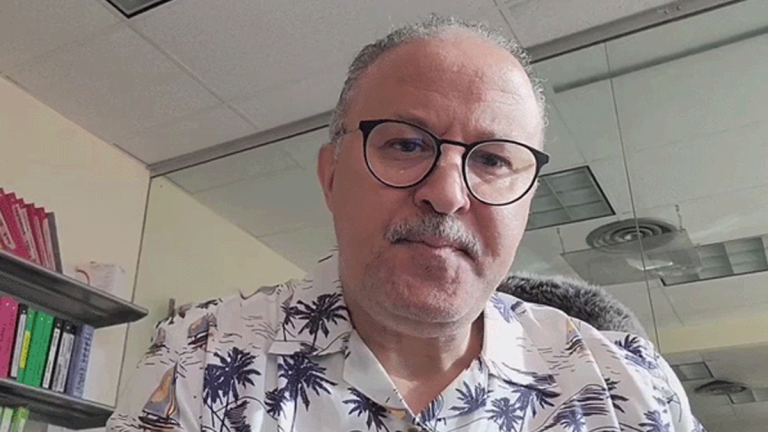
This conference, organized by the Mohammed VI Foundation for Health Sciences, aims to provide a platform for reflection and discussion that brings together researchers and specialists to discuss the radical changes in health sciences education in light of technological developments, especially the opportunities and challenges currently offered by artificial intelligence. In a statement to the Moroccan News Agency, the general manager of the Mohammed VI Center for Applied Pedagogy in Health Sciences, Abdelkrim Bahlaoui, highlighted the strategic mission of the center, which was established about a year ago, which is to develop educational skills within the healthcare system, explaining that the center aims to train teachers and trainers on modern learning methods in the age of artificial intelligence. In his speech on the main topic of the conference, he stressed the importance of artificial intelligence in clinical and practical training and teaching, and not only in theoretical contexts. He also revealed the ambition of the Mohammed VI Foundation for Health Sciences to establish a specialized chair in artificial intelligence to support teachers and trainers. For her part, Dean of the Mohammed VI Faculty of Medicine in Rabat, Fadila El Kohan, mentioned that this event responds to an urgent need to adapt teaching methods to the rapid transformations brought about by technological progress. She pointed out that this conference is the first of its kind in Morocco on the pedagogy of learning in the age of artificial intelligence. She stressed that the conference seeks to promote collective thinking about the effective integration of artificial intelligence and modern technologies in medical training, while ensuring respect for ethics and preserving the basic human values of health sciences, noting that the conference is witnessing wide international participation, which indicates effective cooperation in this field. In this context, Ahmed Moussa, a newborn doctor at the Sainte-Justine University Hospital Center and director of the Health Education Research Center at the University of Montreal, highlighted the strength of the Moroccan-Canadian partnership, which is embodied in close cooperation with the Mohammed VI Foundation for Health Sciences to develop joint educational initiatives. Moussa, who heads a delegation of health sciences education experts, indicated that artificial intelligence is an "essential ally" and an "effective tool" to support education and training, stressing the need to develop a clear framework to improve its use in medical learning and training. For her part, Anne Demeestère, President of the International Francophone Association for Medical Education, praised the excellent organization and rich scientific content of this conference. She welcomed the constructive cooperation that resulted in the creation of the first university diploma in health education in Morocco, stressing the Association's commitment to continue its cooperation with the Mohammed VI University and the relevant Moroccan authorities. The conference program focuses mainly on active and experimental learning methods, through numerous interactive workshops covering various topics, including the use of artificial intelligence in healthcare professions, active learning tools, medical simulation and communication in clinical environments, interdisciplinary learning, and the development of psychological and social skills, and new methods of clinical assessment. In addition to the plenary sessions in which prominent experts speak and interactive workshops that focus on active learning, medical simulation and interdisciplinary learning, this conference will conclude with a graduation ceremony for the first batch of the university diploma program in applied pedagogy for health sciences in Morocco, which confirms the commitment of the Mohammed VI Foundation for Health Sciences to the continuous improvement of educational and pedagogical practices. (With)