HIBAPRESS – Abdellatif Baraka
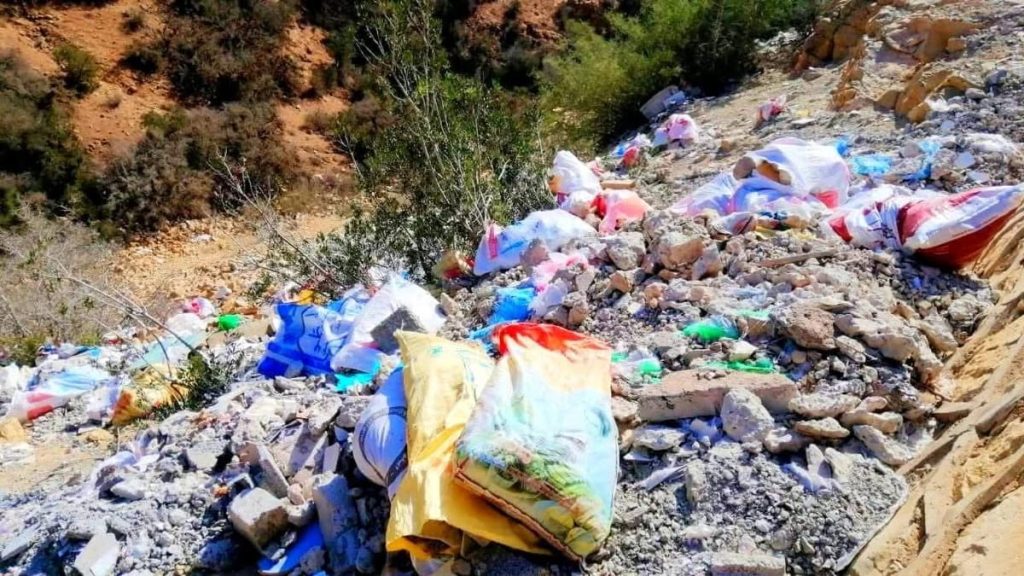
The Aghroud forest, located on the Imouzzer road within the territorial jurisdiction of the Tamri commune, is witnessing a worrying environmental situation, after parts of it have turned into black spots due to the increasing spread of waste of various kinds. These forest areas, which are supposed to be a quiet natural space, have become exposed to random practices that have turned them into something resembling an open landfill for garbage, construction waste, and plastic.
Environmental activists are warning of the repercussions of this situation, pointing out that the accumulation of waste does not only affect the disfigurement of the general view, but also extends to include damage to the soil and vegetation, in addition to the emission of bad odors and the disruption of the environmental balance within the forest. Also, some materials, especially plastic and construction waste, remain for long periods without decomposition, which increases the complexity of the situation and deepens the damage. This forest is of particular importance due to its hosting of argan trees, which are among the most prominent natural components in the region, and an environmental and economic asset of great value. However, the continuation of this behavior directly threatens this wealth, and puts it at risk of gradual deterioration, in the absence of a firm intervention that limits these practices. In this context, demands are rising for the need for urgent action by the concerned authorities to put an end to this phenomenon, by cleaning the forest area of accumulated waste, tightening the control of violators, in addition to activating deterrent measures to prevent the repetition of such behaviors. Those interested also emphasize the importance of accompanying this with awareness campaigns that instill a culture of respect for the environment among citizens and visitors. Followers affirm that protecting natural spaces cannot remain the responsibility of official authorities only, but is a collective commitment that requires the involvement of everyone, especially in an area where nature, especially the argan tree, forms an essential part of the local identity and the elements of environmental and tourist attraction.