HIBAPRESS – Abdellatif Baraka
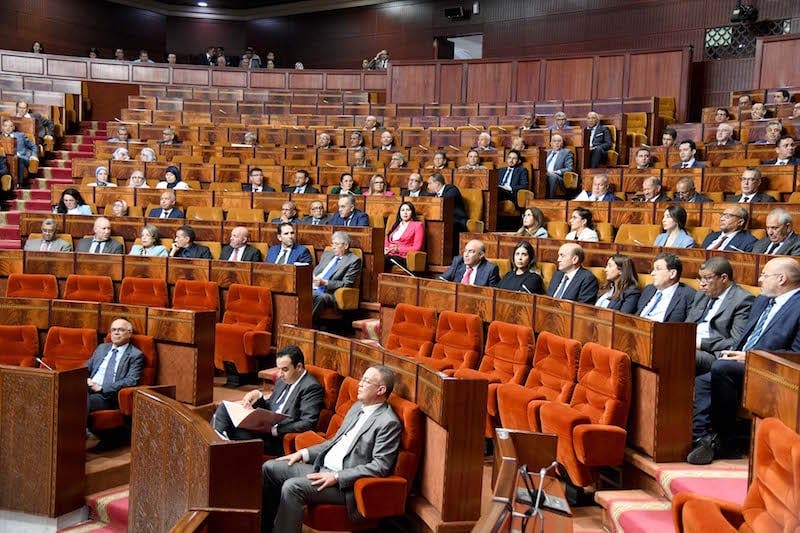
The opposition group in the House of Representatives has renewed its call to the government to adopt a progressive annual tax on large fortunes within the 2026 Finance Bill, with the aim of strengthening tax justice and reducing social and spatial disparities that still exist despite efforts in the fields of social protection and economic development.
The opposition proposes that this tax should include residents in Morocco whose net worth exceeds 50 million dirhams, to be applied at progressive rates starting from 0.25% and reaching 1% on the highest wealth brackets. The assets concerned include real estate, stocks, bank deposits, commercial assets, and precious possessions, with the exclusion of the main residence and professional tools used in economic activity. The opposition also calls for allocating half of the proceeds of this tax to the Social Cohesion Fund, in order to finance major social programs and projects to reduce spatial disparities, considering that "the solidarity of the wealthy with the state and society has become a national necessity imposed by the current stage." In the same context, the opposition has put forward alternative proposals concerning the imposition of a special tax on real estate wealth, affecting properties whose value exceeds five million dirhams, with the exemption of the main residence and lands or properties used in agricultural or industrial production. The owners of these properties are obliged to submit an annual declaration detailing their properties before the end of March of each year, in a step aimed at enhancing tax transparency and achieving fairness in the distribution of burdens. Proposals have also emerged calling for a more comprehensive tax, starting from a threshold of only ten million dirhams, at rates ranging between 0.5% and 2% depending on the value of the wealth, considering that such a measure would provide the state with additional and sustainable financial resources without prejudice to the middle class or productive companies. The opposition believes that the establishment of a wealth tax represents an effective mechanism for redistributing wealth and achieving social balance, especially in light of the increasing financing needs for the social protection project and major development projects that the country is betting on in the coming years.