HIBAPRESS – Ahmed Wazaroti
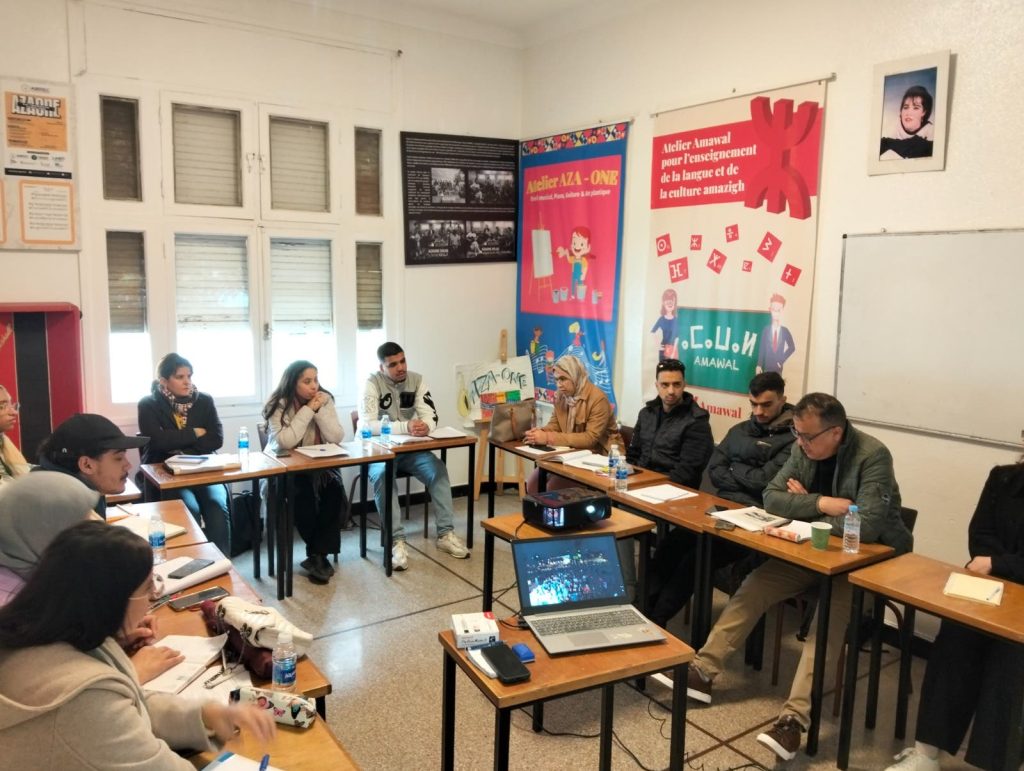
As part of its training program aimed at promoting cultural diversity, the Ibrahim Akhayat Foundation for Cultural Diversity, with the support of the Royal Institute for Amazigh Culture (IRCAM), and in partnership with the Moroccan Association for Research and Cultural Exchange AMREC, organized an intensive training course on cultural and creative industries, communication, and the entertainment economy, during the period from Thursday, December 11 to Sunday, December 14, 2025.
According to the statement received, the headquarters of the Moroccan Association for Research and Cultural Exchange in Rabat hosted the work of this course, which benefited 25 participants, including 12 students in the master's program at Ibn Tofail University in Kenitra, specializing in the fields of cultural and creative industries, communication, and media. The training activities began on the first day with an opening ceremony in the form of a round table, which brought together Moroccan and Spanish experts, during which they discussed the challenges of media communication in light of cultural diversity, with a focus on the stakes of linguistic and cultural pluralism in the public space and the role of the media in keeping pace with these transformations. The following days were devoted to a series of lectures and practical workshops, led by university professors, experts, and professionals of recognized competence, where key topics were addressed, such as the legal framework for cultural industries in Morocco, the world of entertainment, the economics of culture, and the financing of artistic projects, in addition to the stakes of cultural entrepreneurship and questions of linguistic diversity in cultural policies. The course was distinguished by its enrichment through field experiences of prominent actors in the sector, including the Moroccan film director Axel Reifman, and Catherine Breuil, organizer of the Salam Music Festival in Vienna, in addition to the participation of the artist Abdelwahed El Hajjaoui, who shared with the audience his experience in promoting Amazigh music and introducing it inside and outside Morocco. The closing day was devoted to presenting a collective summary of the training gains, and discussing a strategic proposal aimed at linking the economy of culture, cultural promotion, and public policies. On this occasion, the Moroccan Association for Research and Cultural Exchange and the Ibrahim Akhayat Foundation for Cultural Diversity renewed their emphasis on the importance of establishing a budget sensitive to diversity (BSD-AMREC), which aims to integrate cultural diversity as a basic lever in the programming of the finance law and in the national economic strategy. This initiative falls within a common vision that seeks to enhance the capabilities of young people, support cultural entrepreneurship, and establish an inclusive and sustainable approach to cultural diversity in Morocco, making culture a real tributary to economic and social development.