HIBAPRESS – Casablanca
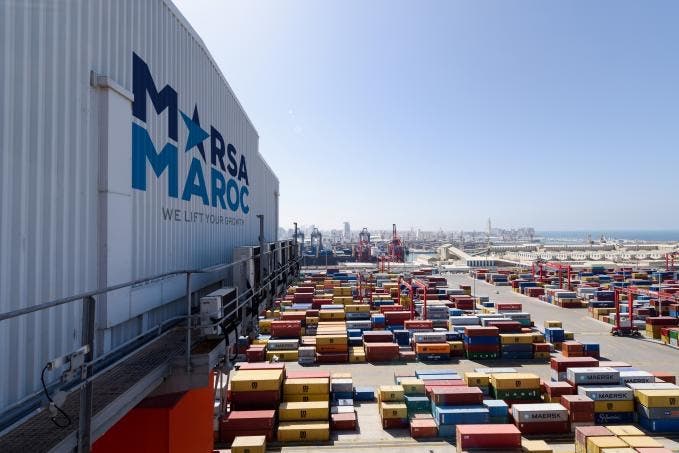
A number of economic actors, especially those working in the field of exports, continue to complain about the imbalances that Moroccan ports experience in handling containers during periods of bad weather. They complain about delays in handling containers and the increase in the cost of storing them inside the port, a situation for which they hold Marsa Maroc responsible as the main operator of container terminals.
According to data obtained by the HIBAPRESS electronic newspaper from professionals in agricultural and industrial sectors geared towards export, the recent sea storms that hindered the entry and exit of cargo ships caused a build-up of containers inside the ports, but the real problem – as they put it – lies in the continuation of the delay even after the climatic conditions have improved, without taking exceptional measures to speed up processing or alleviate the financial burdens resulting from this.
Exporters confirm that the length of time containers stay in storage yards leads to an automatic increase in storage expenses, which constitutes an additional burden on the cost of export and undermines the profit margin. They also pointed out that these expenses are imposed in full, even though the reasons for the delay are largely due to climatic factors beyond the will of the exporters.
In this context, economic actors express their dissatisfaction with what they consider to be a strictness from Marsa Maroc, which – according to them – refuses to adopt temporary discounts or exceptional offers on storage fees during periods of bad weather, similar to what some regional and international ports do in cases of force majeure. They believe that the absence of such flexibility increases the tension between operators and exporters and deepens the feeling of not sharing risks.
Professionals believe that this situation not only threatens the financial balances of exporting companies, but may also affect the attractiveness of Moroccan ports as logistics centers, at a time when Morocco is betting on strengthening its position in international trade chains. They also warn that continuing to burden exporters alone with the cost of operational imbalances may push some of them to reduce their activity or look for less costly alternatives.
In light of this reality, exporters demand an urgent dialogue with the relevant authorities and the approval of exceptional mechanisms that take into account the impact of bad weather on port activity, including reducing or suspending storage fees during periods of forced disruption, and improving coordination and communication with economic actors, in a way that ensures the continuity of exports and preserves the competitiveness of the national economy.
A group of developed countries resorts to solutions during this special period, where for example, in the port of Rotterdam, a special storm emergency plan is activated as soon as weather warnings are issued, which specifies precisely when operations are suspended, how they are resumed, and what the priorities are after the weather improves. This pre-planning reduces the downtime and prevents containers from accumulating randomly inside the yards.
As for the port of Hamburg, it relies on the "Green Lane" system for containers containing agricultural or sensitive food products. As soon as activity resumes, these containers have priority in unloading and handling, avoiding losses associated with spoilage or deterioration of the goods, which protects exporters from double losses.
In the United States, especially in the port of Los Angeles, the authorities resort to extending working hours and operating exceptional night shifts immediately after the storms end, with the aim of absorbing the accumulation left by the suspension of navigation. This operational flexibility contributes to reducing the length of time containers stay inside the port and alleviating pressure on storage yards.
One of the most prominent measures that several international port authorities resort to is adopting temporary grace periods or reducing storage fees (Demurrage) during cases of force majeure. Instead of calculating fees automatically, they are suspended or reduced until activity returns to its normal pace, within the framework of an approach based on sharing risks between operators and beneficiaries of the port.
Digital platforms play a pivotal role in smart ports, where all stakeholders are involved in real-time data on ship arrival times, yard density, and expected waiting times. This method, widely used in the ports of Northern Europe, allows exporters to make prior decisions, such as postponing non-urgent shipments or rescheduling distribution chains.
In emergency situations, some ports resort to utilizing temporary external storage yards (Off-dock yards) to quickly clear the main yards, which reduces congestion and reduces the length of time containers stay inside the port, and thus the cost of storage.