HIBAPRESS
In a qualitative step that reflects the strong will to promote the social and solidarity economy sector, the State Secretariat in charge of Traditional Industry, Social and Solidarity Economy was able to bring out a framework law project that establishes a new phase in organizing this sector and strengthening its position within the national economy.
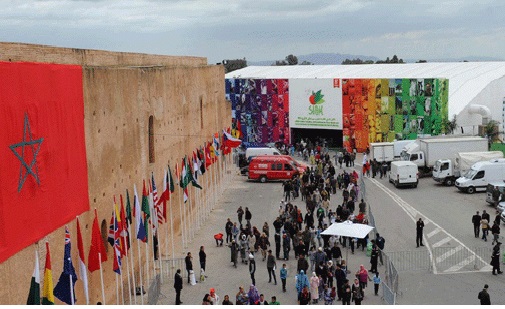
The General Secretariat of the Government published this law project on its official website yesterday, which defines the general principles and rules framing the support and strengthening of this sector, ensuring better governance, a clear legal framework, and encouraging various actors to engage in its dynamics. This project is the result of an extensive participatory process, which was characterized by holding a series of intensive meetings and consultations with various stakeholders, including cooperatives, associations, social enterprises, public institutions, and international partners. It was also based on the outcomes of the National Conference on the Social and Solidarity Economy, which was hosted by the city of Benguerir, which saw the participation of more than 3,000 participants, and the organization of more than 30 thematic workshops that addressed governance, financing, marketing, digitalization, and training. This conference was a pivotal station that produced strategic recommendations, most notably the establishment of a unified legal framework, strengthening access to finance, developing follow-up mechanisms, and improving the competitiveness of actors. The draft law aims to: establish an integrated legal framework that frames the various components of the social and solidarity economy, improve the governance of the sector and enhance its transparency, strengthen the role of actors, especially cooperatives, facilitate access to support, financing, and follow-up programs, and achieve convergence between public policies related to the sector. Today, the social and solidarity economy is one of the main pillars of the national economy, where the number of cooperatives exceeds 64,000 cooperatives across the national territory, and includes more than 760,000 members, with women constituting an important percentage exceeding 40% of the total members, as well as employing hundreds of thousands directly and indirectly, and also contributes to economic integration, especially in the rural world. This legislative workshop comes to keep pace with this dynamic and gives the sector the necessary legal framework to enhance its contribution to sustainable development and spatial justice.