

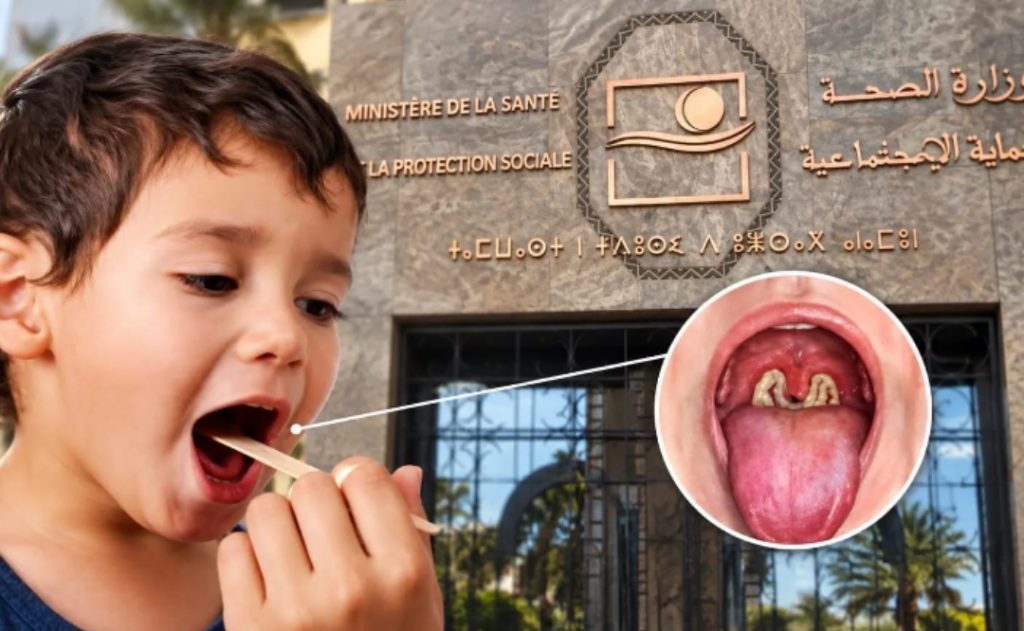
HIBAPRESS warned doctors and health experts of the repercussions of the emergence of diphtheria cases in Morocco, stressing that vaccination remains the primary means of preventing the disease and curbing its spread. This was during a scientific symposium organized on Wednesday evening via videoconferencing, in partnership between several scientific associations and the Ministries of Health and Social Protection, and National Education, Early Childhood, and Sports.
The symposium, dedicated to shedding light on diphtheria, its diagnosis, confirmation of infection, contact management, treatment, and prevention, saw the participation of doctors, experts, specialists, and media representatives. Approximately a thousand health and media professionals, stakeholders, and interested parties followed the proceedings via Zoom, in addition to viewers on YouTube.
In their opening remarks, Dr. Moulay Said Afif, President of the Moroccan Society of Medical Sciences and Infovac Africa, alongside Dr. Hassan Affellal, President of the Moroccan Society of Pediatrics, and Professor Mohamed Bouskroui, President of the Moroccan Society of Infectious Diseases in Children and Vaccination, emphasized the importance of vaccination in preventing infectious diseases and limiting their spread. They called for countering rumors and misleading information with reliable scientific data.
Dr. Mohamed Lyoubi, Director of Epidemiology and Disease Control at the Ministry of Health and Social Protection, stated that non-vaccination is behind the emergence of diseases including measles and diphtheria. He urged families to review their children's health records and ensure they have received the necessary vaccinations and booster doses.
Lyoubi stressed the importance of mobilizing various stakeholders to address cases of incomplete vaccination and to preserve the gains made by the National Immunization Program, in order to avoid the return of diseases whose spread levels have decreased in recent years.
Mustapha El Yaacoubi, Director General of School Life Organization at the Ministry of National Education, Early Childhood, and Sports, presented the measures taken by the ministry in coordination with the Ministry of Health and Social Protection. He explained that the ministry had circulated a directive to educational institutions to gather data on any suspected cases, enhance monitoring and follow-up, and verify the vaccination status of students.
The official added that the measures also include referring students showing symptoms to the relevant medical services, and taking necessary precautions to protect students, educational, and administrative staff, while avoiding exaggeration.
The scientific program of the symposium included presentations on various aspects of diphtheria. Professor Mohamed Bouskroui discussed clinical diagnosis and the consequences of the disease, while Professor Nabila Sraï, a microbiologist in Marrakech, presented on laboratory confirmation of infection.
Dr. Fatima Zahra Smirou from the Directorate of Epidemiology and Disease Control presented on diphtheria surveillance in Morocco, including data and comparisons at the African and global levels. Dr. Mouad El Mrabet, Coordinator of the National Center for Public Health Emergency Operations at the Ministry of Health, addressed contact management and the definition of contact cases.
Dr. Mohamed Benazzouz, responsible for the National Immunization Program, discussed the vaccination response to diphtheria cases. The symposium concluded with discussions on the role of the media in combating fake and misleading news and promoting the dissemination of reliable health information.
Participants affirmed that vaccination is the most effective means of preventing diphtheria and vaccine-preventable diseases. They noted that a single dose, as concluded by the symposium, is sufficient for adults who have previously been vaccinated in childhood to protect them from the disease.
The participants proposed enhancing vaccination within educational institutions and leveraging the experience of 2023 in combating measles outbreaks. They also suggested integrating students' vaccination status into the data associated with the national student ID "Massar," which would allow for vaccination tracking and communication with families when doses are incomplete.
They also called for developing communication mechanisms during health crises and accelerating the availability of official data to the media and the public, in addition to organizing regular training and communication meetings on health issues, and strengthening coordination between government sectors, scientific associations, and the media.